Tomb of the Unknown Soldier

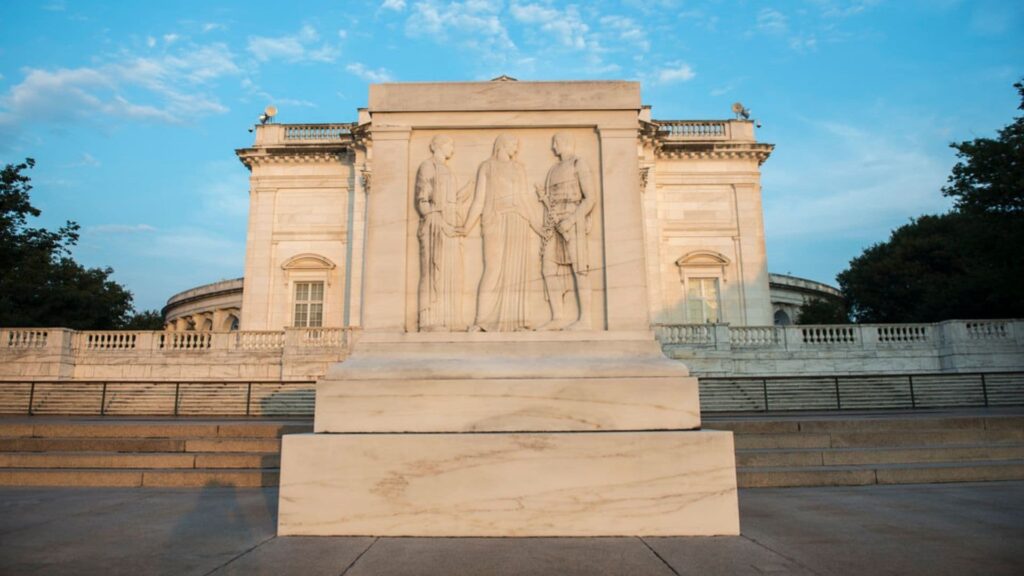
Visitors come to the Tomb of the Unknown Soldier to honor military service and sacrifice, to mourn a loved one; or simply to appreciate its history and meaning. The tomb is guarded by soldiers from the 3rd U.S. Infantry Regiment, known as The Old Guard. The Tomb of the Unknown Soldier includes a World War I sarcophagus and two crypts for unknown veterans from World War II and Korea. The crypts are located on the east side of the Memorial Amphitheater.
The Tomb of the Unknown Soldier is a monument in Arlington National Cemetery that honors unknown American soldiers. It is a reminder that thousands of Americans have lost their lives fighting for the freedom and security of others. The tomb is guarded 24 hours a day, 365 days a year. The guards change every hour in winter and every half hour in summer. The changing of the guard is a solemn and moving ceremony that takes months to prepare for.
The tomb originally contained the remains of a single Unknown soldier from World War I. After that, the remains of Unknown soldiers from World War II and Korea were interred at the Tomb. Eventually, the crypt would also contain the remains of Unknowns from the Vietnam War. Each of these Unknowns was honored by the Medal of Honor and a flag from the country in which they served.
Guards are stationed at the Tomb to prevent people from walking on it. Originally, the guard was a civilian, but after complaints of disrespectful behavior by tourists, a military guard was placed at the tomb. The soldiers, who are known as sentinels, are members of the 3rd U.S. Infantry Regiment, also known as “The Old Guard.” Becoming a sentinel is considered one of the highest honors in the Army and requires intense training.
Tomb of the Unknown Soldier Facts
The movement to bury unknown soldiers at special graves began with World War I, a war in which many soldiers died and were never identified. America’s allies, France and Great Britain, already had their own Tombs of the Unknown Soldier. During Armistice Day ceremonies on November 11, 1921, the World War I Unknown casket was transported from the Capitol Rotunda to Arlington National Cemetery’s Memorial Amphitheater on a horse-drawn caisson. A state funeral was held, at which President Warren G. Harding placed the Medal of Honor on the casket, and foreign dignitaries presented their nations’ highest awards.
After the World War II and Korean Wars, unknowns from those wars were interred in crypts to the west of the World War I Unknown’s grave. In 1998, the Unknown Soldier from the Vietnam War was positively identified through DNA testing as Air Force 1st Lt. Michael Blassie. He was reinterred at Jefferson Barracks National Cemetery in St. Louis, Missouri.
When the United States began to lose soldiers in large numbers during World War I, it took inspiration from France and Great Britain and created memorials for the unidentified dead. Congress agreed to create the Tomb of the Unknown Soldier as a national symbol of honor and respect.
It has been guarded 24 hours a day, 365 days a year, and in every kind of weather. The sentinels, members of a special platoon within the 3rd U.S. Infantry Regiment, known as “The Old Guard,” do not wear rank insignia while guarding the tomb. This ensures that they do not outrank the soldiers buried in it. The guards are volunteers and consider it a high honor to serve in the role.
They stand watch despite the pouring rain, blizzard-like snow, and the scorching Washington summers. “It becomes almost instinctive to walk the 21 steps,” said Guard Sentinel Chris Mancha, who has served since 1997. Mentally ticking off the seconds while he stands in front of the Tomb makes him think of the families of those who never found out what happened to their loved ones.
The Tomb of the Unknown Soldier contains caskets from World War I, World War II, and Korean War. The World War II and Korea Unknowns were chosen from among remains exhumed from military cemeteries in Hawaii, Europe, and the Philippines. They joined the World War I Unknown in a special ceremony on Armistice Day in 1958. President Dwight D. Eisenhower then signed a bill to change the name of Armistice Day to Veterans Day, to honor all American service members, past and present.


